- Comparison
Sausage Patty vs Sausage Link: What's the Difference in a Sandwich or Burger?
Same sausage family. Very different sandwich experience.
When comparing a sausage patty vs sausage link, shape might seem like the only real difference. But once you put that sausage between bread, the format affects nearly everything: how the meat fits, where the toppings land, the texture of each bite, and even what type of bread makes sense.
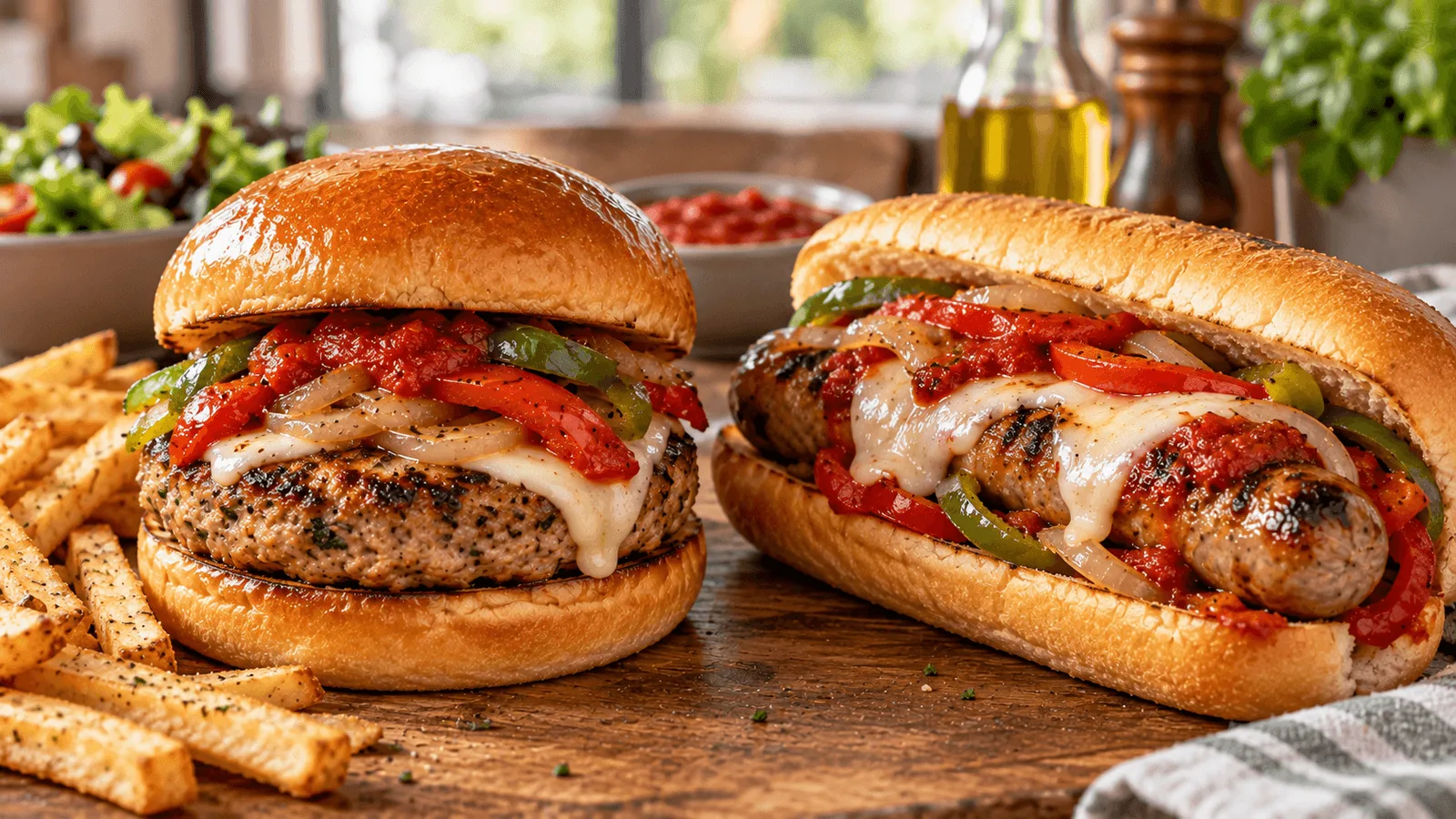
At Sausage Sam’s, you can see both approaches through the NY Style Original Sausage Burger and Sam’s Jumbo Sausage Slammer.
The NY Style Original puts sausage into a burger-style patty format. Sam's Jumbo Sausage Slammer goes in the sausage-sandwich direction. Both deliver Italian sausage flavor, but they definitely don't eat the same way.
So, sausage patty vs sausage link: which belongs in your next order?
TLDR - Quick Guide
- A sausage patty is formed into a flatter shape that fits naturally on a burger bun.
- A sausage link has an elongated shape better suited to rolls and traditional sausage sandwiches.
- Patties can provide more consistent meat coverage across a burger.
- Links preserve the familiar shape and bite associated with traditional sausage.
- Try the NY Style Original Sausage Burger when you want sausage flavor in burger form.
- Choose Sam’s Jumbo Sausage Slammer when you're craving a more traditional sausage-sandwich experience.
- Browse the Sausage Burgers & Sandwiches menu to compare your options.
Detailed Breakdown
1. What Is the Main Difference Between a Sausage Patty and Sausage Link?
The obvious difference is shape.
A sausage patty uses sausage meat formed into a flatter, round or oval shape. That makes it a natural fit for burger-style buns.
A sausage link keeps the elongated sausage shape most people immediately recognize. That format works naturally with longer rolls and traditional sausage sandwiches.
But shape creates a ripple effect.
It influences:
- Bread choice
- Meat distribution
- Topping placement
- Texture
- Bite size
- How easy the sandwich is to handle
That's why the sausage patty vs sausage link comparison becomes much more interesting once bread enters the equation.
2. A Sausage Patty Fits the Burger Format
Burger buns are broad and relatively round.
So are burger patties.
That matching geometry is one of the biggest advantages of using sausage in patty form.
A sausage patty can spread the meat across more of the bun, helping create a relatively consistent sausage-to-bread ratio from the center toward the edges.
It also gives toppings a broad surface to sit on.
Cheese, lettuce, tomato, onions, and sauces can be distributed similarly to the way they would be on a traditional hamburger.
The difference is that your patty brings sausage flavor instead of conventional beef-burger flavor.
3. The NY Style Original Shows What Sausage Can Do in Burger Form
The NY Style Original Sausage Burger is a good example of why sausage doesn't have to stay in link form.
It takes the sausage experience and moves it into familiar burger territory.
That's useful for someone who enjoys Italian sausage but happens to be craving the shape, structure, and eating experience of a burger.
Instead of asking whether you want sausage or a burger, you can have elements of both.
For a closer look at this style, Italian Sausage Burger in San Jose explores how Italian sausage works as a burger.
4. Sausage Links Deliver the Traditional Sandwich Experience
Links take a different route.
The elongated shape is immediately suited to rolls, which is why sausage links and sausage sandwiches have been such reliable partners.
A link gives you a distinct sausage bite surrounded by bread and toppings rather than spreading the meat across the entire surface like a patty.
That creates a different texture and meat-to-bread relationship.
For people who associate Italian sausage with a substantial roll and classic sandwich format, the link-style experience is probably going to feel more familiar.
5. Sam's Jumbo Sausage Slammer Leans Into the Sausage Sandwich
Sam’s Jumbo Sausage Slammer represents the hearty sausage-sandwich side of the comparison.
Here, the sandwich format is designed around making sausage the centerpiece rather than reshaping it to imitate a conventional hamburger.
That's an important distinction.
A great sausage sandwich doesn't need to pretend to be a burger.
The bread, sausage, and accompanying ingredients should work together to create something that has its own identity.
If you're firmly on the sandwich side of the sausage patty vs sausage link debate, What Makes a Great Sausage Sandwich takes a deeper look at that balance.
6. Which Format Gives You More Sausage in Every Bite?
This depends on the size and construction of the specific sandwich, but the shape affects distribution.
A patty spreads sausage across a wider area.
That means your first bite from the edge can still include a meaningful amount of meat rather than mostly bread.
A link concentrates the sausage through the center of a longer roll.
Your bites may include different proportions of bread, sausage, and toppings depending on where you bite.
Neither approach is inherently better.
The patty favors coverage.
The link favors a distinct sausage-centered bite.
Pick your priority.
7. Texture Is Different Too
The sausage patty vs sausage link question isn't only about geometry.
Texture can also change.
A sausage link keeps the familiar structure associated with traditional sausage. Depending on preparation, that can create a more distinct exterior and sausage-like bite.
A patty creates a broader cooking surface and a burger-style eating experience.
Even when both start from seasoned sausage, reshaping the meat changes how it interacts with the bread and toppings.
That's why switching formats can make familiar sausage feel like a noticeably different meal.
8. Toppings Work Differently on Patties and Links
Ever tried balancing several toppings on a round sausage link?
Gravity has opinions.
A flat patty gives toppings a broad platform, making burger-style layering relatively straightforward.
A link creates a narrower structure. Toppings tend to sit alongside or over the sausage inside the roll, producing the layered experience associated with traditional sausage sandwiches.
That can influence what toppings work best.
Patty format works naturally with:
- Cheese
- Lettuce
- Tomato
- Sliced onion
- Burger-style sauces
Link-style sandwiches work naturally with:
- Cooked onions
- Peppers
- Cheese
- Sauce
- Other Italian-inspired additions
The goal in either case is balance, not seeing how many toppings can survive the trip to your mouth.
9. Bread Matters More Than People Realize
The meat and bread should be designed for each other.
A broad burger bun makes sense with a patty because their shapes line up.
A longer roll makes sense with a link because it surrounds the sausage along its length.
Mismatching those shapes can produce bites that contain too much bread or barely any sausage.
That's why choosing the best sausage for a sandwich isn't only about seasoning. Format matters too.
For a broader discussion, see What Type of Sausage Is Best for Sandwiches?.
10. Which Is Better for Takeout?
Both can work well for pickup and delivery.
A sausage patty has one practical advantage: its broad shape fits naturally inside a burger bun and provides a stable base for toppings.
A link sandwich can also travel well, particularly when the roll provides enough structure for the sausage and its toppings.
For either format, the bigger takeout concerns are usually:
- Moisture from sauces
- Hot toppings
- Bread structure
- Packaging
- Travel time
Eating the sandwich reasonably soon after it arrives generally gives you the best chance of enjoying the intended textures.
11. Which Should Burger Fans Choose?
Start with the NY Style Original Sausage Burger.
It gives you the familiar structure of a burger while replacing the conventional burger patty with sausage.
That means you still get:
Bun + patty + toppings = familiar burger experience.
The difference is what's happening inside the patty.
For someone curious about Italian sausage but reluctant to give up burger night, this is the easier transition.
12. Which Should Sausage Sandwich Fans Choose?
Go with Sam’s Jumbo Sausage Slammer.
If your idea of a satisfying sausage meal involves a substantial sandwich built around Italian sausage, the traditional sandwich direction makes more sense.
The link-style format allows the sausage to maintain its recognizable identity instead of turning it into a burger patty.
Sometimes you don't want sausage reinvented.
You just want a really good sausage sandwich.
Sausage Patty vs Sausage Link: Which Should You Order?
The sausage patty vs sausage link decision comes down to the experience you want.
Choose a sausage patty when:
- You're craving a burger.
- You want broad meat coverage across the bun.
- You like burger-style toppings.
- You want sausage flavor in a different format.
Choose a sausage link when:
- You're craving a traditional sausage sandwich.
- You enjoy the distinct texture of a sausage link.
- You prefer a longer roll.
- You want the sausage itself to remain visually and texturally central.
At Sausage Sam's, the NY Style Original Sausage Burger and Sam's Jumbo Sausage Slammer make the comparison easy.
One turns sausage into a burger.
The other lets sausage be sausage.
Both are valid lunch strategies.
Key Takeaways
- A sausage patty vs sausage link comparison starts with shape but extends to texture, bread, toppings, and meat distribution.
- Sausage patties are flatter and naturally suited to burger-style buns.
- Sausage links have an elongated format that works naturally in traditional sausage sandwiches.
- The NY Style Original Sausage Burger offers sausage flavor in a familiar burger format.
- Sam’s Jumbo Sausage Slammer provides a more traditional sausage-sandwich experience.
- Patties can create more even meat coverage across a burger bun.
- Links provide the recognizable shape and bite associated with traditional sausage.
- Burger-style toppings are easier to layer across a flat patty, while sausage-sandwich toppings fit naturally around a link.
- Neither format is automatically better—the right choice depends on whether you're craving a burger or a sausage sandwich.
FAQs
What is the difference between a sausage patty and a sausage link?
The primary difference is shape and format. A sausage patty is formed into a flatter shape that fits naturally on a burger bun, while a sausage link has the elongated form commonly used in traditional sausage sandwiches. That difference also affects texture, bread choice, topping placement, and how much sausage you get in each bite.
Is a sausage patty the same as a hamburger patty?
Not necessarily. The shape may be similar, but a sausage patty uses sausage meat and its associated seasoning rather than a conventional hamburger mixture. That's why something like the NY Style Original Sausage Burger can provide a familiar burger experience while tasting distinctly different from a standard beef burger.
Which is better in a sandwich: sausage patty or sausage link?
It depends on the sandwich. A patty works particularly well when you're using a burger-style bun and want even meat coverage. A sausage link works naturally in a longer roll and provides the more traditional sausage-sandwich experience. Neither is universally better; the bread and toppings should match the sausage format.
What's the difference between the NY Style Original Sausage Burger and Sam's Jumbo Sausage Slammer?
The NY Style Original Sausage Burger puts sausage into a burger-style patty format, while Sam's Jumbo Sausage Slammer represents the traditional sausage-sandwich direction. The biggest differences are the shape of the sausage, the bread format, topping distribution, and the texture you experience in each bite.
Should I order a sausage burger or sausage sandwich?
Choose a sausage burger when you want the structure and topping style of a burger with sausage as the meat. Choose a sausage sandwich when you're specifically craving the traditional link-and-roll experience. If you're still undecided, trying each on different orders is the most delicious form of research.